
Winter makes driving more challenging, especially in the mountains. Snow, ice, and inclement weather can quickly make the roads dangerous.
That is why the Mountain Law II requires vehicles traveling in the affected areas to be equipped with appropriate gear. It thus aims to improve driver safety during the winter months. However, although this law is necessary, it remains poorly understood by many drivers.
Automakers are constantly seeking to reduce their vehicles’ fuel consumption. To achieve this, they are making parts lighter and reducing the available space in the wheel wells. This trend has intensified since the WLTP standard took effect in 2017.
The result? Wheel wells are narrower and tires are larger. In addition, some vehicles—particularly electric ones—now weigh more than 2.3 metric tons.
At Polaire (Joubert Group), we work closely with manufacturers to develop truly compatible and secure chain-linking solutions.
In this article, learn about the key provisions of the Mountain Law II. We also discuss the penalties for noncompliance and the importance of properly equipping your vehicle.
Finally, find out why Polaire is a partner of choice. Our solutions help you comply with regulations and drive with greater peace of mind this winter.
Introduction to the Mountain Act II: Why Is This Law Necessary?
The Mountain Law II, in effect since 2021, requires drivers traveling in certain mountainous areas of France to equip their vehicles with anti-skid devices, such as snow chains, snow socks, or snow tires. The purpose of this law is to reduce the number of traffic accidents during the winter months, when weather conditions deteriorate and snow and ice make driving dangerous.
In France, nearly 500 accidents occur each year on snow-covered or icy roads, resulting in approximately 50 deaths. The majority of these accidents take place in mountainous areas where winter driving conditions are particularly difficult. In these regions, drivers must not only battle the elements but also contend with heavy traffic due to the influx of tourists during the winter holidays.
The Mountain Act II therefore aims to improve road safety, as well as to reduce traffic jams caused by poorly equipped vehicles that get stranded on the road, resulting in costly interventions by local authorities and endangering the lives of other drivers.
The Requirements of the Mountain Act II: What You Need to Know
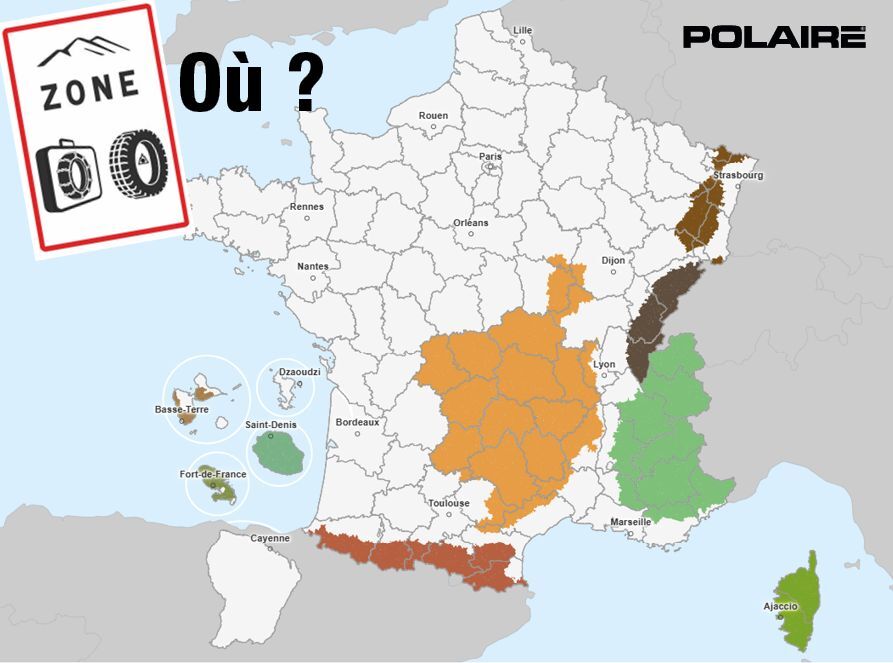
The Mountain Law II applies in 34 French departments. It applies primarily to mountainous areas such as the Alps, the Pyrenees, the Massif Central, the Jura, and the Vosges. It applies to all categories of vehicles with four or more wheels: passenger cars, utility vehicles, RVs, tour buses, city buses, and heavy trucks.
Effective Period and Affected Areas
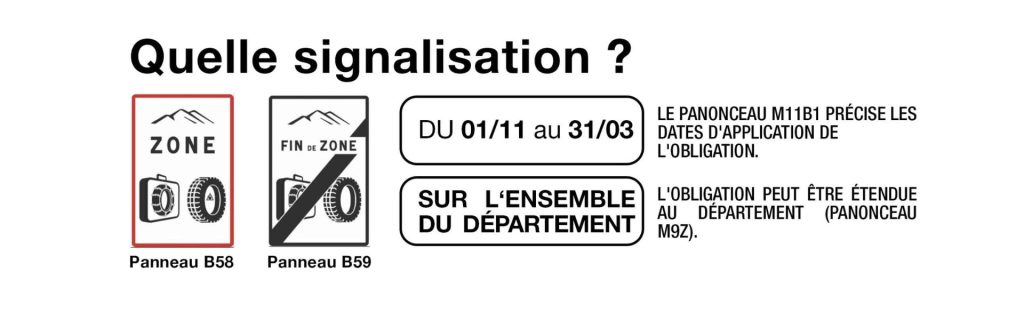
The law is in effect each year from November 1 through March 31, a period during which weather conditions are at their harshest in mountainous areas. Specific signs indicate the affected departments. Sign B58 marks the entrance to the regulated zone, while sign B59 marks the exit.
Authorities generally install these signs at the entrances to municipalities or mountainous areas. However, the regulations may also apply to an entire department. The recent adoption of the M11B1 and M92 signs confirms this. These signs indicate the effective dates of the law as well as the broader areas subject to the requirement.
What equipment is required?
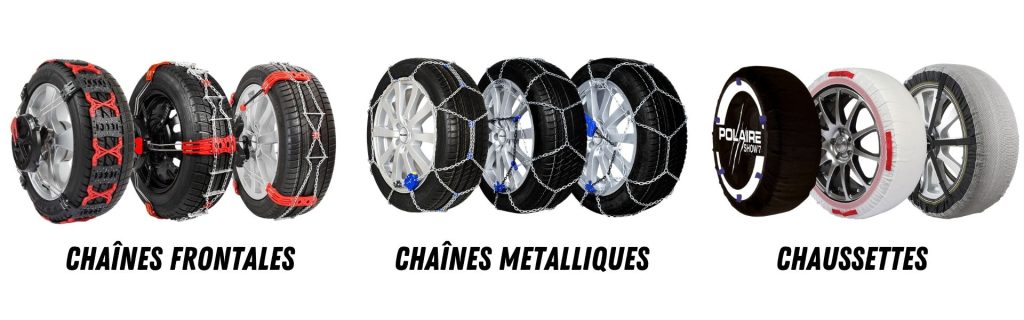
To comply with the Mountain Act II, vehicles must be equipped with the appropriate gear. There are several ways to meet the requirements of the regulation.
Snow chains
Snow chains are removable anti-skid devices. They are installed on the vehicle’s drive wheels. They provide excellent traction on snow and ice.
Snow socks
Snow socks offer an alternative to snow chains. They are lighter and easier to install. They are also a more economical solution.
Check out our selection of snow socks Polaire.
4 winter tires with 3PMSF
Tires bearing the 3PMSF (Three Peak Mountain Snowflake) symbol provide better traction on snow and ice. As of 2024, they can be used in place of snow chains under the Mountain Law.
However, M+S (Mud and Snow) tires alone are no longer sufficient. You may still use other types of winter tires. In that case, you must also have snow chains to drive in the affected areas from November 1 through March 31.
In summary, all drivers living in or traveling through areas covered by the Mountain Law II must have snow chains or snow socks in their trunk, or equip their vehicle with four 3PMSF-certified tires throughout the winter season.
Get a glimpse of our line of winter equipment for homeowners:
Penalties for Noncompliance
Failure to comply with the Mountain Act II can result in severe penalties. If you drive in a restricted area without the proper equipment, you risk a fine of €135. In addition, law enforcement may impound your vehicle, which can cause major inconvenience, especially if it happens in a remote area or in cold weather.
But beyond legal penalties, there is also a financial risk related to insurance. In the event of an accident, if your vehicle is not equipped in accordance with the Mountain Law, some insurance companies may refuse to cover the damages. This could have serious consequences for drivers and their passengers, especially in remote areas where weather conditions make it more difficult for emergency services to reach them.
Why choose snow chains?
Snow chains are one of the most effective solutions for driving on snowy or icy roads. They provide optimal traction, even in extreme conditions, and allow you to maintain full control of the vehicle. Although installing them may seem tedious to some, newer models—such as those offered by Polaire—are designed to be easy to install, even in cold or snowy weather.
In addition, snow chains are especially recommended for drivers who have to navigate steep slopes or roads that haven’t been plowed.
The Benefits of Snow Socks
Snow socks are a
a lighter alternative
metal chains. They are
easy to install and remove
, and provide sufficient traction for light snow conditions. Although they are less durable than snow chains, they remain a popular choice for drivers who don’t want to be burdened with heavier equipment.
Polaire offers a complete line of snow socks, designed for various types of vehicles, which
combine ease of use with performance. These products are particularly popular among drivers who are not used to driving on snowy roads but still want to comply with the law.
Snow chains and snow socks are a more economical solution than snow tires for dealing with winter conditions. In fact, their purchase price is generally much lower than that of tires specifically designed for snow (3PMSF marking). Furthermore, unlike snow tires, which must be installed and changed every season, chains and snow socks can be used as needed—particularly during heavy snowfall or on icy roads. They can also be reused year after year, as long as they are properly maintained and fit the vehicle’s tire size, making them a practical and cost-effective option for occasional drivers in snowy areas.
Why choose Polaire for your winter gear?
When you need to comply with a regulation as important as the Montagne II Act, it is crucial to choose reliable, high-performance equipment. Polaire, a brand of the Joubert Group, is a leader in the field of anti-skid devices for vehicles.
Polaire: A Mark of Trust
We are known for the quality and reliability of our equipment. For years, we have been offering high-performance winter equipment suitable for all types of vehicles and all winter conditions. Our mission is to make winter driving safer and easier by offering innovative, durable, and easy-to-use products. Each product is rigorously tested to ensure maximum effectiveness, even in extreme conditions.
Snow chains and snow socks Polaire: Easy to install
One of the main concerns drivers have when it comes to snow chains is installation. We’ve developed systems that allow for quick and intuitive installation. Whether you choose metal chains, front chains, or snow socks, you’ll be able to install them in just a few minutes—even in a snowstorm.
Our Polaire products are also designed to be durable. They withstand wear and tear and the harshest conditions, ensuring optimal safety throughout the winter season.
Products suitable for all vehicles
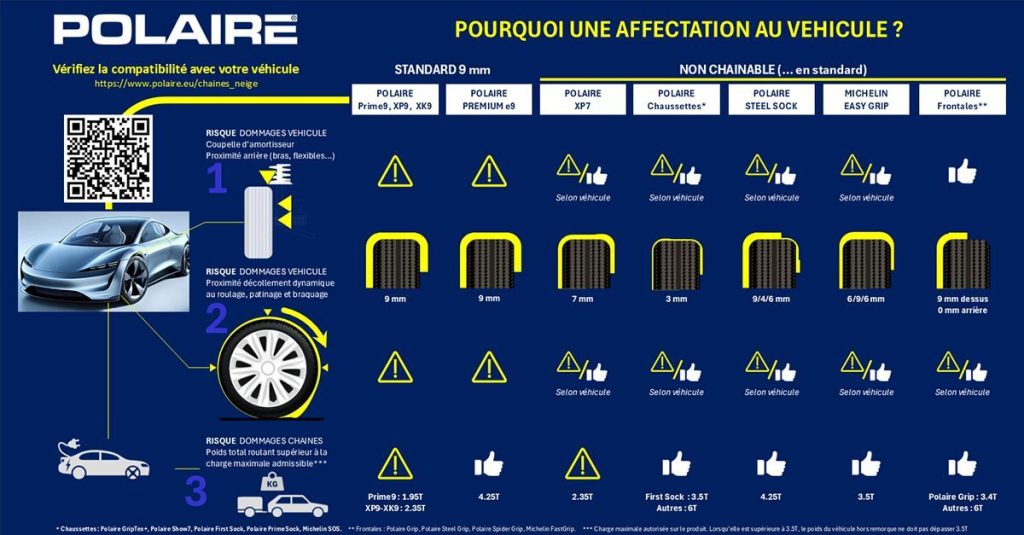
Whether you drive a small city car, an SUV, an electric vehicle, or a utility vehicle, we offer solutions tailored to your needs.
In addition, we ensure that our products meet the latest road safety standards and regulations, including the requirements of the Montagne II Act.
The Impact of the Mountain Act II on Road Safety
Mandatory equipment, such as snow chains, snow socks, and winter tires, helps vehicles maintain better traction on the road and prevents loss of control, which can lead to serious accidents.
However, despite some progress, many drivers are still not properly equipped. According to a survey conducted in September 2024 by the Tire Association, 92% of drivers agree that the Mountain Law is a good initiative, but some remain hesitant to invest in the appropriate equipment. This underscores the importance of continuing to raise drivers’ awareness of the dangers of winter driving and the benefits of proper equipment.
Get ready for winter with Polaire!
The Mountain Law II is an essential measure to ensure the safety of all drivers during the winter months. If you plan to travel or drive in areas covered by this law, it is essential that you be properly equipped. Don’t let snow and ice compromise your safety.
With Polaire, you have access to a complete line of snow chains and snow socks that will help you comply with regulations while driving with peace of mind. Don’t take any unnecessary risks this winter. Get your vehicle ready now and ensure you travel safely with Polaire products.